


From being the “Egyptian Pharaoh” at Anfield to a “disillusioned substitute,” the rift between Mohamed Salah and Liverpool caught many off guard but had been brewing for months. When Salah stated in a mixed zone interview, “I feel abandoned by the club,” a storm that had been gathering for months finally erupted. This was more than just a simple contract dispute—it was the inevitable result of a combination of tactical shifts, salary pressures, and underlying locker room tensions. Much like the unpredictable outcomes of a Bangla Cricket Live match, the situation seemed to shift in ways no one anticipated.
The arrival of Dutch coach Slot brought a tactical revolution to the club, and this ultimately became the breaking point for Salah. Slot abandoned Liverpool’s trademark high-pressing game, opting for a more conservative 4-4-1-1 low-block defensive formation. In this new system, Gomez dominated the right-back position, Szoboszlai shifted inside to play midfield, and Salah—known for his wing play and ball control—found himself misaligned with the new tactics. The drop in his statistics served as the most powerful evidence of this disconnect: Salah’s average shots per game plummeted from 1.63 last season to just 0.8, and his touches in the opposition box dropped from 10.5 to 7.32. He was no longer the focal point of the attack, becoming a “tactical redundancy.” In a match against Leeds, Slot even preferred to let new signing Ekitiqué score a brace rather than substitute Salah, sending the clearest signal that Liverpool was moving toward a “de-Salah” strategy.
As the club’s highest-paid player (earning £400,000 a week, second only to Haaland), 33-year-old Salah is facing the most difficult valuation of his career. Last season, he won the Premier League Golden Boot and Assist King titles, but this season, after 19 matches, he has only contributed 5 goals and 3 assists, a stark contrast to his hefty salary. According to reports from The Telegraph and other reputable outlets, the club’s management has expressed concerns about the financial burden of his high salary. The two-year contract extension has locked up salary space, and Salah’s decline in form has caused potential dissatisfaction within the locker room. While core players like Van Dijk have also underperformed, Salah has been singled out for his “selfish play, hindering new signings’ integration,” making him the scapegoat in some quarters. This selective targeting is the root of his frustration, leading to his accusation of being “treated as a scapegoat.”
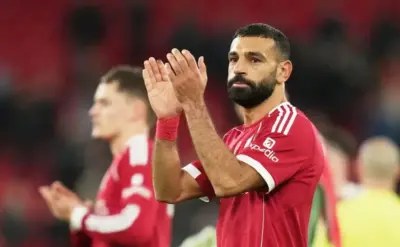 “The sudden lack of communication between me and the manager,” Salah revealed in an interview, was not coincidental but a reflection of their fractured relationship. This breakdown in communication coincided with a subtle shift in power dynamics within the team. When Szoboszlai openly stated, “I don’t know if that championship team still exists,” and younger new signings began to emerge, the balance of power in the locker room had already started to tip. Salah chose to speak out after Liverpool’s draw against relegation-threatened Leeds, seizing the moment with the provocative phrase, “Did they not play terribly without me?” His words were not only an expression of his frustration but also a calculated pressure tactic, attempting to use public opinion to reclaim his voice. However, he may have underestimated the club’s determination to rebuild under the new regime.
The rumors of a £150 million per year offer from the Saudi Pro League were not unfounded. As The Athletic’s renowned journalist lamented, “It’s a shame Salah had to say goodbye in this way.” But football is a cold world, and when tactical value, salary efficiency, and locker room harmony all collapse, separation might just be the best option for both sides. Salah’s tragedy is that, despite being a player who created some of the top assist records in Premier League history, he now faces the cruel reality of “fading into obscurity.” The situation mirrors how, in Bangla Cricket Live matches, even legendary players must sometimes step aside as the game evolves.
As he choked up with the words, “All I wanted was the respect I deserve,” he summed up the inner frustration of many veteran players. For Liverpool, the challenge now lies in finding a delicate balance between emotion and tradition, reason and the future, a test that will greatly challenge the wisdom of the management. This drama has no true winners—it is just another cruel confirmation of the cold reality of professional football.