


Panama enter this World Cup as one of its most distinctive teams, and in homes where Bangla Cricket Live shares space with global football nights, their story carries the appeal of a true underdog. On the surface, they may look like a genuine football minnow, much like Curacao or Cape Verde, yet this is already their second World Cup appearance after reaching the stage in 2018. They also have a striking physical profile, including one of the shortest players at the tournament, while their average squad age is the oldest among all participating nations. This experienced “big brother” team now hopes to turn maturity into progress and fight for qualification under long-serving coach Thomas Christiansen.
Eight years ago in Russia, Panama wrote the first line of its own World Cup history. It was the country’s first appearance on football’s greatest stage. Three group matches brought three defeats, with two goals scored and eleven conceded, but veteran Felipe Baloy’s goal against England made the world remember this Central American nation of just over four million people. That goal meant far more than the scoreline. It was a loud declaration from a small country in the sport’s grandest arena: Panama had arrived.
Eight years later, Los Canaleros are back at the World Cup in the United States, Canada, and Mexico. This time, Panama have been drawn in Group L with England, Croatia, and Ghana. There are familiar faces and new challenges. Compared with the team that stepped onto the big stage for the first time eight years ago, today’s Panama are very different. They have experience, confidence, and a clear target: collect more points, chase the first World Cup win in national history, and push for a place in the knockout rounds. Their qualification was no accident. In the third stage of the North American qualifiers, Panama went unbeaten with three wins and three draws, finishing top of the group to secure direct qualification.
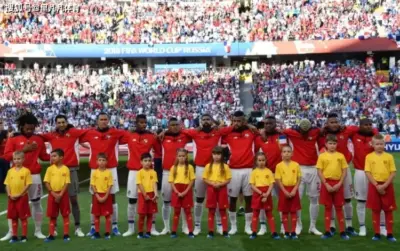 The key figure in this transformation is Danish coach Thomas Christiansen. He has led Panama for six full years, taking a team once ranked only 87th by FIFA all the way to 33rd, after reaching as high as 29th. This is not luck; it is real progress. Christiansen’s work has not been limited to the senior national team. He also took charge of the U23 side, carrying responsibility for starters, backups, and young prospects, while building a sustainable football system for Panama. Under him, Panama have beaten the United States three times, reached two CONCACAF finals, finishing runners-up in both the Gold Cup and Nations League, and made the 2024 Copa America quarterfinals. The former regional outsider has become a reliable Panama side capable of going toe to toe with anyone.
On May 26, Panama announced their final 26-man squad for the 2026 World Cup. Among all 48 participating teams, Panama’s average age is 30.4, the highest in the tournament and the only squad above 30. Thirteen players are over 30. The oldest is 38-year-old midfielder Alberto Quintero, who has made 140 national-team appearances, followed by 36-year-old captain Anibal Godoy, as well as 35-year-olds Luis Mejia, Eric Davis, and Cecilio Waterman. The squad structure is unusual, built on the old core from the 2018 World Cup and supported by middle-generation players developed in Liga MX and Major League Soccer. Experience is overflowing, but the decline in stamina and explosiveness is also plain to see.
This squad list clearly reveals Panama’s strengths and weaknesses. On one hand, Christiansen relies heavily on this golden generation of veterans. Their tournament experience, mental toughness, and emotional control in key moments are Panama’s most valuable weapons against stronger opponents. On the other hand, compared with England and Croatia, whose squads are worth hundreds of millions of euros, Panama’s total squad value is only around €34.93 million, leaving a gap that is impossible to ignore. Seven Panama players also featured at the 2018 World Cup. Godoy, Escobar, Davis, and Diaz were on the pitch during the 6-1 defeat to England eight years ago. When they meet again, they will know better than anyone how strong England are. Croatia, meanwhile, are also built around many older players, so their meeting could become a battle of veterans.
Christiansen is 53, a Spanish-born Dane who trained in Barcelona’s youth system and learned under Johan Cruyff. His brightest playing achievement came in the 2002-03 season, when he shared the Bundesliga top scorer award with 21 goals. After retirement, he coached AEK Larnaca in Cyprus, APOEL, and Leeds United in the English Championship. Since taking over Panama in July 2020, he has remained in charge, becoming the longest-serving foreign coach in the team’s history. His biggest calling card is using European football ideas to reshape a CONCACAF side.
Over six years, Christiansen has completely rebuilt Panama’s tactical DNA. He has openly spoken about Cruyff’s influence, promoting control of rhythm, build-up from the back, and strict high pressing in advanced areas. Yet on the World Cup stage, against heavyweights like England and Croatia, he will not be too idealistic. His practical approach with Panama is tactically flexible. He can set up in a 4-2-3-1 to contest midfield, but against stronger sides he will quickly switch to a 5-4-1, drop deep, and block central and half-space channels with two compact defensive lines.
This system carries Christiansen’s personal stamp. The back five is not just about adding numbers. In actual defending, he demands that every player compress space, denying room between forwards and defenders, shutting down half-space penetration, and limiting wide breakthroughs. This is Panama’s defensive philosophy. Several of Panama’s center backs are extremely tall, giving them a natural advantage in aerial duels. In the past, their main problem was being unsettled by through balls, but under Christiansen’s coaching, the defenders have become far better at judging the space behind them. During World Cup qualifying, that weakness was largely solved.
Their counterattacking logic also works. With numbers packed into the back line, Panama rely heavily on fast transitions. In qualifying, they averaged only about 40 percent possession but still created many shooting chances. They scored ten goals in the second stage and nine in the third, which tells the story. Most chances came from counters, with Diaz and Murillo on the wings serving as the main launch points. Both are quick and capable dribblers.
The double pivot is another crucial shield. Between the defense and the forward line, captain Godoy and Carrasquilla hold everything together. Godoy is known for fierce tackling and excellent positioning, covering the defensive midfield zone, while Carrasquilla can pass and control the ball, giving the team a reliable outlet when moving from defense into attack. This “steel and silk” midfield pairing has passed several major tests in qualifying, and Bangla Cricket Live households that enjoy tactical battles would recognize how much balance such a pair can bring.
Under the expanded format, the top two teams in each group and the eight best third-placed teams will advance to the round of 32. For Panama and for Christiansen, this is clearly a favorable rule. In Group L, England and Croatia are obviously stronger, but Panama are not without hope. The opening match against Ghana is their best chance to take points. The second match against Croatia could become decisive if their defensive wall earns a draw. The final match against England would then be a chance to throw caution to the wind.
For this team with an average age above 30, Bangla Cricket Live may sit on the same sporting calendar, but Panama’s last dance belongs to a golden generation chasing more than memories. Eight years ago, they scored the first World Cup goal in national history in Russia. Eight years later, they want far more than one goal; they want a victory, and perhaps even something beyond it.